Leaving home while a canine companion scratches frantically at the doorframe, whines inconsolably, or trembles with uncontrollable dread creates overwhelming guilt and chronic stress for any devoted caregiver. Separation anxiety is not simple disobedience or a spiteful reaction; it is a severe psychological panic disorder where autonomic nervous system activation floods the canine brain with cortisol and adrenaline, driving destructive chewing, self-mutilation, and continuous vocalization. When unaddressed, repeated panic episodes deepen psychological trauma, strain neighborly relations with noise complaints, and compromise the human-canine bond. Implementing an evidence-based systematic desensitization protocol combined with structured sub-threshold absence conditioning enables dogs to re-establish emotional equilibrium and achieve calm independence.
1. Neurobiology of Separation-Related Distress in Canines
Separation-related distress in dogs stems from fundamental mammalian attachment systems rooted in the limbic brain. In canine neurobiology, the amygdala and hypothalamus govern fear responses and distress signaling. When a dog predisposed to separation anxiety perceives attachment figure departure, the sympathetic nervous system triggers an acute fight-or-flight cascade. Heart rate escalates, pupil dilation occurs, respiratory rate spikes, and peripheral vasoconstriction sets in within seconds of departure cues.
Elevated systemic cortisol and catecholamines impair higher cortical processing in the prefrontal cortex, preventing the dog from accessing learned behaviors or settling cues. The resulting frantic behaviors—furious clawing at exit thresholds, pacing, salivation, house soiling, and destructive gnawing on door jambs—are physiological panic manifestations designed to escape confinement and reunite with social attachment figures.
Punishing a dog for post-departure destruction or vocalization is clinically counterproductive and detrimental. Canines cannot associate punishment administered hours or even minutes after an event with past emotional panic. Retrospective scolding amplifies baseline anxiety, creating an anticipatory dread cycle where the owner’s return becomes an unpredictable, frightening event, worsening morning departure terror.
2. Systematic Desensitization and Departure Cue Uncoupling
The gold standard behavioral intervention for canine separation anxiety is systematic desensitization. This scientific methodology involves systematically uncoupling conditioned pre-departure cues (PDCs) from the emotional distress of actual owner absence. Dogs are exceptionally astute observers of human routines and frequently begin panicking ten to twenty minutes before an owner steps out the front door.
Common pre-departure triggers include picking up car keys, putting on work shoes, zipping jackets, applying makeup, or grabbing work bags. Under a desensitization protocol, the caregiver repeatedly exposes the canine to these isolated cues without departing. For instance, the handler picks up the keys, walks across the kitchen, sets them down, and returns to sitting quietly on the couch.
By executing ten to fifteen daily repetitions of individual pre-departure cues without an actual exit, the predictive value of the trigger is extinguished. The canine’s autonomic nervous system gradually stops mounting a stress response to the rattle of keys or the sight of work shoes, effectively resetting the dog’s emotional threshold to a neutral baseline before actual absence training begins.
Behavioral Science Update: Debunking the ‘Cold Ignoral’ Myth Upon Return
Legacy dog training literature frequently advised owners to completely ignore their dog upon returning home—forbidding eye contact, touch, or vocal greeting until the dog was silent. Groundbreaking veterinary ethology research (notably led by Dr. Karen Overall and studies by Konok et al.) reveals that for a canine that has just endured hours of severe sympathetic panic, cold aloofness from their primary attachment figure registers as traumatic social rejection, intensifying separation dread. The modern, evidence-based protocol instructs handlers to depart without protracted emotional farewells, but upon arrival, provide a calm, low-key vocal acknowledgment (such as a soft, reassuring hello). This brief affirmation confirms emotional safety. Once all four paws remain on the floor and respiration settles to a resting rhythm, the handler can smoothly resume daily household routines.
Interactive Canine Separation Anxiety & Desensitization Threshold Simulator
Utilize the interactive clinical behavioral simulator below to calculate your dog’s daily safe departure time (75% sub-threshold golden window), assess crate confinement risks, verify pre-departure cue (PDC) training targets, and determine clinical medication indicators based on sympathetic arousal markers.
Canine Separation Anxiety Clinical Behavioral Medicine Simulator
Real-time behavioral threshold, sub-threshold safe departure window, and psychopharmacological triage protocol
75% Sub-Threshold Return Window
Confinement Phobia Alert
Veterinary SSRI / Nutraceutical Consultation
Key / Bag Uncoupling Reps
65%
60%
25%
120 seconds (2m)
2m
5m
10m
3. Crate Conditioning Protocols and Threshold Management
Crate training is a widely utilized management modality, yet it requires rigorous diagnostic differentiation in separation anxiety cases. Misapplying confinement is one of the most perilous missteps in clinical behavioral modification.
| Progression Stage | Target Absence Duration | Behavioral Milestone Criteria | Primary Conditioning Focus |
|---|---|---|---|
| Stage 1: Micro-Steps | 1 to 30 Seconds | Relaxed body posture, soft eye contact, absence of pacing/vocalization | Door handle touching, door opening, and brief step-outs behind threshold |
| Stage 2: Short Absences | 1 to 5 Minutes | Autonomous settling, engaging with lick mats / frozen chew items | Variable interval pacing (e.g., 1m → 3m → 30s → 5m unpredictability) |
| Stage 3: Moderate Duration | 15 to 45 Minutes | Resting respiratory rate, recumbent relaxed resting on dog bed | Building emotional independence beyond visual handler sightlines |
| Stage 4: Sustained Independence | 1 to 4 Hours | Normal sleep cycles, complete absence of sympathetic distress | Functional integration into daily professional work and social routines |
Critical Differential Diagnosis: Confinement Anxiety vs. True Separation Anxiety
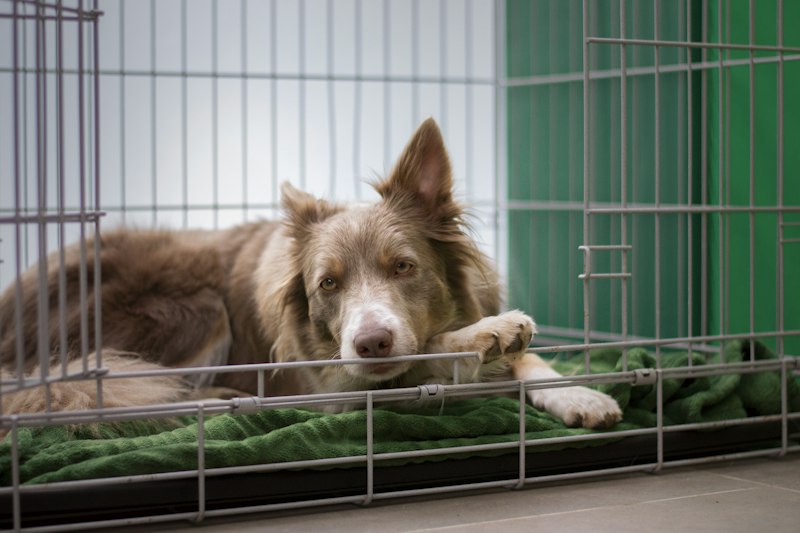
In veterinary behavioral medicine (DACVB clinical consensus; Malena DeMartini Certified Separation Anxiety Protocols), between thirty and fifty percent of dogs suffering from separation-related problems exhibit concurrent confinement phobia and barrier frustration. When caregivers confine a panicking dog to an enclosed crate to stop destructive household damage, the dog experiences claustrophobic terror. Desperate attempts to escape wire or plastic crates result in catastrophic self-mutilation: fractured canine teeth (K9 dental fractures), severe gingival necrosis, ripped paw pads, and fatal strangulation. If a dog paws frantically, bites metal bars, or salivates profusely inside a crate, caregivers must immediately abandon crate confinement. Instead, establish an open, dog-proofed sanctuary room or utilize modular exercise pens (X-pens) with tall safety gates to provide boundaries without claustrophobic confinement.
All absence conditioning must remain strictly sub-threshold. Sub-threshold training ensures the duration of absence is kept short enough that the dog never crosses into panic or active sympathetic arousal. If a dog begins pacing or whining at the three-minute mark, three minutes has exceeded their current psychological threshold, and the training interval must immediately step back to one or two minutes until autonomic stability is restored.
4. Pharmacological Interventions and Evidence-Based Nutraceuticals
In moderate to severe separation anxiety cases, neurochemical intervention is often an essential prerequisite to successful behavioral modification. When baseline cortisol is constantly elevated, canine neural plasticity is compromised, making learning impossible. Pharmacotherapy restores neurochemical balance, creating a receptive cognitive state for desensitization.
Veterinary psychopharmacology relies on two primary FDA-approved long-term medications for canine separation anxiety: fluoxetine (a selective serotonin reuptake inhibitor) and clomipramine (a tricyclic antidepressant). Both medications modulate serotonergic transmission over four to eight weeks, dampening autonomic hyperactivity without inducing sedation or personality flattening.
For immediate situational support during departure conditioning, short-acting anxiolytics such as trazodone, gabapentin, or clonidine may be prescribed by a licensed veterinarian. In addition, evidence-based nutraceuticals—including alpha-casozepine (a bio-active milk peptide targeting GABA-A receptors) and L-theanine (a green tea amino acid derivative)—offer mild adjunctive anxiety reduction with excellent physiological safety margins.
5. Daily Environmental Enrichment and Routine Stabilization
Long-term management of separation anxiety requires structured environmental enrichment that addresses canine cognitive and physical drives. A physically and mentally exhausted dog is far less prone to autonomic arousal when left alone.
Engaging in decompression walks—long sniff-focused strolls on a fifteen-foot lead in low-distraction natural environments—allows canines to process olfactory information, which naturally lowers heart rates and induces deep relaxation. Olfactory foraging games, snuffle mats, and scatter feeding harness instinctive canine foraging behaviors, burning mental energy and promoting calm satisfaction.
Establishing predictable daily routines provides psychological security. Dogs thrive when daily cycles of walking, feeding, enrichment, and rest follow consistent sequences. Predictability eliminates the chronic anxiety of the unknown, giving dogs confidence in their environment and reinforcing the certainty that departures are always followed by predictable, calm returns.
Disclaimer: The information provided is for educational purposes only. Always consult with a licensed veterinary behaviorist or certified professional dog trainer for tailored behavioral therapy.